


Adult and Workforce Learning
Responsible Assessment in the AI Era: Key Insights from a Future-Focused Conference
AI is changing what, where, and how testing happens. How can schools, teachers, and test developers respond?
By Nneka J. McGee, Candace Thille, Ikkyu Choi, Kadriye Ercikan, Isabelle Hau, Matthew S. Johnson (Reviewer)
Download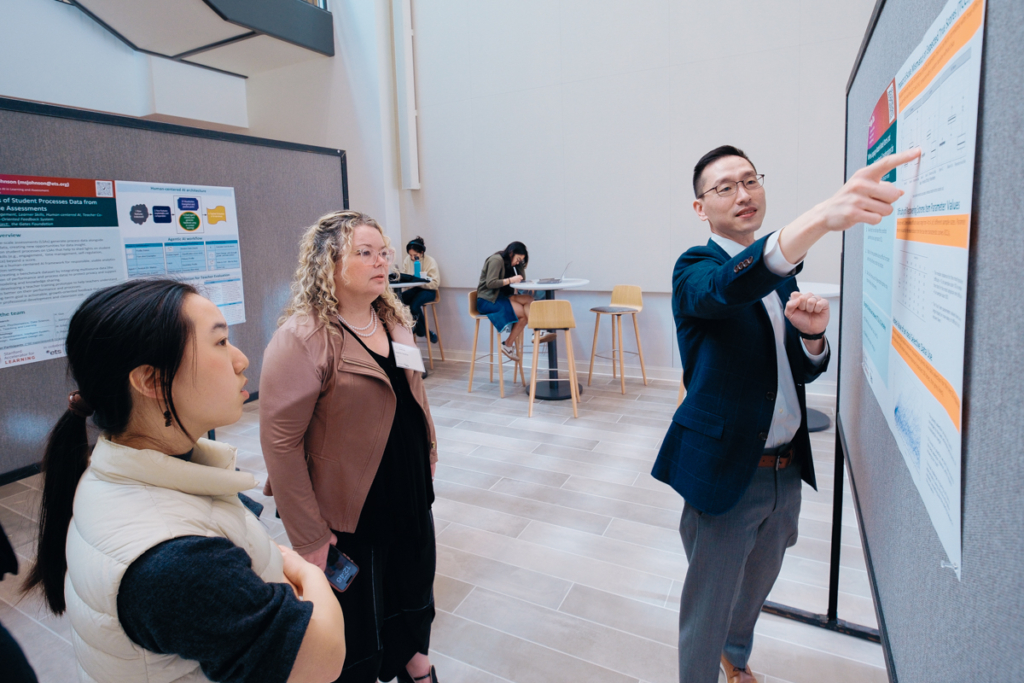
“How do we shape the current moment?”
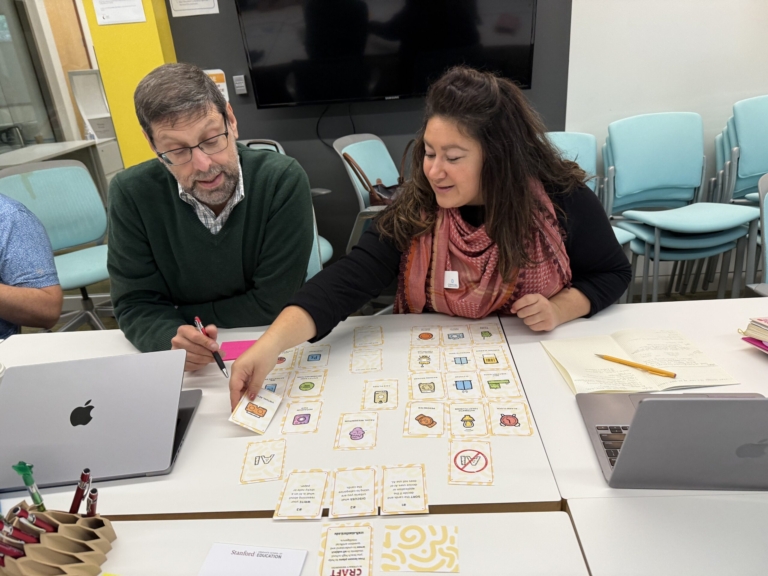
The question, from Stanford Professor and Stanford Accelerator for Learning Faculty Co-Director Candace Thille, framed a broader discussion about how to approach assessment in the era of artificial intelligence (AI). In search of answers, the Stanford Accelerator for Learning, in collaboration and with support from ETS, hosted the “Responsible Assessment in the AI Era” convening on January 29, 2026.
“We want to have conversations that are rich and deep about how research, policy, technology and education come together,” Amit Sevak, CEO of ETS, said in his opening remarks. The convening drew approximately 100 leaders from research, technology, K-12 schools, and higher education institutions seeking to advance the science and practice of responsible assessment in the age of AI. There was a consensus among them: Assessment is at a moment of change, and AI is a major driver of that transformation.
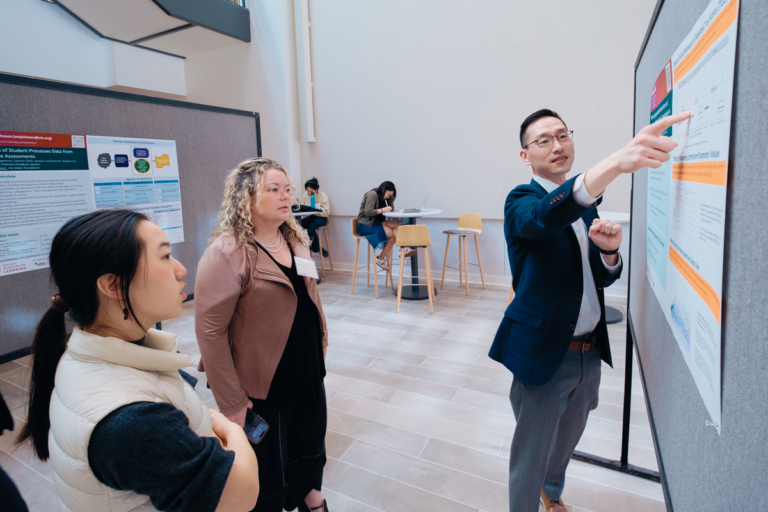
Panelists shared wide-ranging perspectives on evidence, rethinking readiness, socioculturally responsible assessment, and building trustworthy AI. Through poster sessions, scholars presented findings from their latest studies. Contributors expressed their viewpoints at breakout sessions on topics ranging from AI policy to extracting construct evidence. While this paper primarily reflects the insights and perspectives shared by speakers at the event, it also draws on relevant research and related work to contextualize the contributors’ dialogue. It summarizes key takeaways from the convening and includes a glossary of terms related to assessment.
The conference took place at a critical juncture for assessment. There are growing calls for assessments to become more socioculturally responsive to learners’ cultural, educational, and societal contexts in order to optimize engagement, motivation and performance. Through personalization, AI may help address some of these goals.
At the same time, the integration of AI into education and assessment raises questions about which competencies learning and assessment should prioritize, and how to leverage the potential of AI while minimizing the risks of exacerbating opportunity gaps for individuals from different societal and cultural backgrounds. The conference brought these concepts together by focusing on how assessment can become both responsive and responsible for meeting evolving educational goals. This approach promotes responsible AI by supporting valid and fair interpretations and uses of assessment.
In this paper, we use the term “responsible assessment in the AI era” to refer to assessment that is grounded in individuals’ sociocultural contexts and designed to generate valid, trustworthy, and context-specific inferences from accumulated evidence to support learning and development. Responsible assessment is a call that represents a shift toward continuous, context-rich, and developmentally oriented assessment practices that leverage AI in responsible ways, whose principles and practices are detailed in Johnson (2025). It emphasizes a focus on complex critical competencies, accumulation of multiple sources of evidence through socially situated performance over time, and the consideration of sociocultural context. It also seeks to support learning and growth while prioritizing transparency and interpretability in how evidence is used, elicited, and accumulated.
Videos of key sessions at the event can be watched here: https://acceleratelearning.stanford.edu/conference/responsible-assessment-in-the-ai-era/